Monday, April 11, 2011

The Prefect Drug: Why the iTunes model will not work in curtailing online manga theft.

:
Looking at some of the data available for the Japanese domestic market, it’s easy to be drawn to the conclusion that manga will soon see a significant portion of general revenue generated through distribution to customers via mobile network sales, through a combination of subscription service and pay-per-download sales. A little further down the line, and that mix will reach a 50/50 split when stacked against printed distribution and digital distribution. There is a significant upward trend when you look at traditionally printed media (manga and non-manga) from 2007-2010. The data is proprietary so I’m not going to repost the original here and my own infographics are part of an ongoing project, so no freebies, sorry.

There will be trade-offs of course, there will have to be a bigger revenue split between publishers and telecom networks, but through that new relationship the cost of physical printing will be jettisoned, so revenue actually goes up. The implied decrease in WTP for a digital version of a manga vs a print version that would be present in the USA, would be much more muted in Japan; a combination of the trust that Japanese consumers can have in their mobile technology and service providers actually working better (they totally do), and the fact that manga itself has always been seen as much more disposable even when it was physical media, and so the “fear of loss” that keeps people buying actual albums instead of downloading music from online services, rears not its ugly head. The transition from printed media to a medium of both printed and mobile distribution, and finally a dominance of mobile distribution with high end printings still being sold, will happen relatively smoothly for the Japanese market. Who knows, we might even see streamlined preview and download stations in the corners of all the convenience stores that dot the Japanese landscape.

So much like iTunes, and the later proliferation of many other commercial music services has made music piracy a less viable option for many consumer groups, keeping it profitable enough to continue as an industry, can a similar distribution channel for manga be far behind, and stop the theft of manga and make it a more viable business to be in?

The problem is, this isn’t going to change very much in terms of what’s happening with manga in the USA. That’s because of a perfect storm of factors which all must be adequately addressed in order to stop people stealing manga from Japan. Let’s apply the old consultant standby of the two by two matrix:

(I don't give it away for free people).


This isn’t a standard 2x2, where the factors are counter-related, but rather a larger look at a macro whole, each segment of which is in and of itself an entire business universe of operation. Looking at these factors (hopefully) can highlight the lopsided strategy that’s being employed to combat the situation. However from the vantage point of those employing such strategies, the tactics are not lopsided... and they are correct. The tactics are not lopsided, the market or “field of battle” is itself very lopsided, and the vacuous dark abyss that seems to consume all efforts and show no progressive change. A singularity, black hole, capable of sucking off and compressing the skin of all the efforts done not only directly against it, but to other sectors thought separate from its influence. Bonus points if you already know which factor I speak of.

Mindset, has been and will always be the greatest asset and liability to the success of Japanese entertainment media in America. This quadrant, being labeled as such, wears a deceiving veil of simplicity and smallness of form, but in fact, it is an area as vast as an entire market itself, taking into account aspects of sociology, economics, cluster-demography, politics, access to wealth, and age based psychology. Try to take that all in, and you realize the immense undertaking that the strategy and follow through of public relations, is something that would require a division led by a Chief Engagement Officer. Something no company is prepared to do logistically, financially, or ideologically. It is in fact the barrier of ideology, which will prevent any company from undertaking such measures, since any positive progress in abating manga theft is beneficial to their competitors as well, making those competitors “free riders” in the eyes of management.

There is no current independent body inside America that is going to undertake this, and unless the manga and anime market increase in size by about 10,000%, there may not be one any time soon. The type of problems they are up against can be seen in the case study of the Son May music label and the grassroots anti bootleg marketing of the 1990’s. Being on the front lines of that operation, it was amazing to see emerging otaku demand anime music as cheap as it could get, and then swing to a high willingness to pay for legitimate releases once they were successfully educated as to what SM actually was and how it did actual damage to the anime industry as a whole.

The “Mindset” quadrant in and of itself can actually be understood as an operational triangle, with the 3 angular nexuses of (Cluster) Demography – Economy – and Psychology, connected by the three communication mediums of Communal Exclusivity – Gamification Behavior – and Consumer Behavior. These are in tern all operational maxims that have been established by business analysts and strategic consultants form here to Kalamazoo, with their unique operational variances. Additionally, the hard data and direct knowledge needed to correctly interpret and apply that data are all very necessary in not only understanding this previously “unwinnable” quadrant of the above Manga Matrix up there, and they are all here behind the curtain that is my hard drive. You out there in cyberspace get the simplified version, because the real deal is going somewhere important where it will be seen by important people.

Like DaVinci would mix up his designs to prevent copying, so too have some components been moved around... or have they?

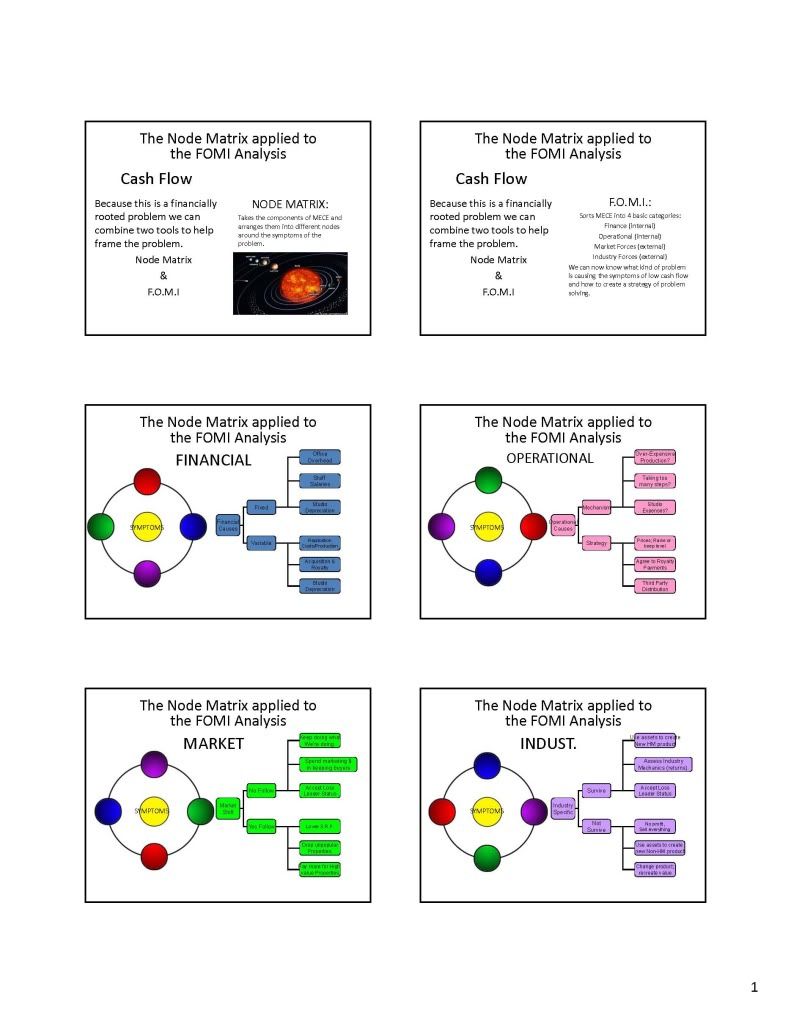
Unlike the S.W.O.T. analysis which is intended to condense broad expanses or the F.O.M.I. analysis (a derivative of M.E.C.E.) designed to narrow down sources of negative cash flow (something the English language manga industry is grappling with), this method of looking at things is designed to allow us to effectively get a grasp of the size and shape of a strategy that’s going to be needed to approach the problem. To get all metaphor-like; doing this is like doing an exercise to properly know not only the size of a container needed to carry a certain volume of water, but also the proper shape it’s going to have to be to fit into a very particularly shaped spot. This is very much a “measure twice, cut once” approach to the daunting task of American otaku customer engagement. This is very important, because the world is full of examples of how much damage can be caused in failed approaches to customer engagement.

It’s also a pipe dream of sorts. For reasons that we have covered here and for other obvious factors out there, some change in the way things operate isn’t going to be happening any time soon. ...or is it? Well, I am working on something for someone regarding this after all.

-

Sunday, April 3, 2011

Donations are Worthless, economic issues and the future of Japan

Did I say worthless? No, I meant worth – less (2 words), so put the torches and pitchforks down.

On April 2, the “Dram for Japan” event was held in New York City’s Ward III bar and nightclub, generating a few thousand dollars (I haven’t seen the final figures yet) for the Japan Society Earthquake Relief Fund, organized by a group of very capable entities, including Teleport City’s own Keith Allison. I was happy to donate what I had available to the items that were auctioned off (give them a good home whoever you are) and I also had the chance to sample some very interesting distilled whiskey products including some selections from a distillery in New York hopefully to be featured on Pinky Mixology in a future episode.

It was a nice time and we raised money for a good cause, but this revelry occurred under a cloud so immense and so entrenched in permanence that it went almost completely unnoticed save for a passing mention by a ninja consultant. That is the monster of currency stagflation and what it’s doing to the Yen. To get a picture of it, you can look at this previous post, and since I’ve talked about it before, I won’t cover the entire matter again, but only reference it in order to point out that there now exists a serious potential to finally equalize the yen. It’s no guarantee, but at least it’s real.

At the moment, foreign currencies are quite weak against the Japanese Yen, which means that basically for every $100 you raise for earthquake relief it will basically just buy lunch for 4 guys after the exchange rate kicks in. Yet this current ratio of conversion can not stand forever, and will either be let down gradually in a controlled manner to minimize damage, or eventually progress to the point it triggers a major upheaval or worse, a collapse. It is in the potential ability to facilitate this controlled adjustment that we can (possibly) find a silver lining in the Tohoku/Sendai Earthquake, if one can call it that.

This event will serve as the impetus of action by the BOJ, to release unexpected (or at least unplanned) amounts of currency into the economy, resulting in a flood of JPY into the local and a subsequent inflation that is very desperately needed. In a perfect (aka economically balanced) world, that would be all it would take, however Japan is in a spot best described as being between a rock and a hard place. The country will release a flood of funds but have limited means to implement the programs it hopes to accomplish... leading to an influx. This influx can either be: A) workers not from Japan but willing to work and live in such a country, or B) a mythical number of Japanese which do not exist, willing to work and live in such conditions as the USA forces Mexicans to tolerate. Seriously, in Japan even whitey is an outsider, and given the sociological problems Japan is having right now, this is the literal last straw.

Will Japan lose some culture and history? No, not really. The country has let millions of non-Japanese through over the pre-Meiji era, and the culture it fears losing has been defined after such occurrences. As long as they can get enough money and public support behind the idea of what their culture is, it will never go away.

So we shall see a great acceleration in the formula that was “Japan Inc.” to all of us early otakus and academics... But now that the snow globe has been shaken up... hopefully Japan is ready for a restructuring of that level, which requires foreigners to rebuild many sections of Japan, but this time thedy will stay and there is nothing that can be done.

Sunday, March 27, 2011

Soy Sauce on Ice Cream: Inserting contemperory American Christianity into anime via fandom.

Putting Judeo-Christian religions and Anime together in a real-world context is like putting soy sauce on ice cream. You could do it, but you'd just ruin 2 things that should be more or less left on their own.

This piece was originally written on March 1, with a scheduled release date of March 16 (to reference the double-entendre of "3:16" as relevant to the subject matter). It has been delayed because of the recent events related to the major earthquake and tsunami that shook Japan, in order to avoid the kind of "God hates Japan" comments that have inevitably come out of ... well should anyone really be surprised at this point?

I saw a somewhat interesting series of pieces on Religion and Anime recently, from a source I probably wouldn't normally see myself reading if not for a helpful link from The Otaku Journalist. Religion, particularly religion in English speaking markets like the various flavors of Christianity, has always been something that I saw as "at odds" with anime for two reasons:

The first reason is more of my generalized interpretation of specific behaviors of the kind of demographics that usually make up anime Otaku in the USA. It's mostly made up of segments that tend to lean towards non-believers. Anime fandom concentrates the non-believers together and helps to make their position stronger in that respect, while at the same time featuring depictions of religious practices and/or super-natural elements that are specifically at odds with dominant Abrahamic principles, repelling the devout believers and causing the kids to be whisked away to special Jesus-camp when mom finds that evil ungodly manga under the bed (yes this really happened).

Reason number two is a combination of incidents I specifically experienced firsthand. I was reminded about a little piece of hate mail that Anime Crash once received around 1998. Apparently, some church group had a website that "warned" parents that anime was more or less pure Satan-juice and your kids are going to hell if they even fucking look at Pikachu. The letter was hilarious, and we actually framed it and put it on display for a while. The 15 minutes of Christian outrage visited upon Anime Crash would continue with some (what appeared to be) students from out of town wandering in, and being genuinely offended that there was a Chinese religious display in a glass case in the store. Knowing Crash, we probably would have sold the thing at the first offer, so it wasn’t like it was particularly holy. But simply the fact that it existed was enough to set them off, and it didn't take them long to start laying into everything from the Chibi Gundams to the ungodliness of Martial Arts.

Finally, I should mention that the home media business has never really had a great relationship with the kind of American Christianity that this survey seems to be a part of, much as it would not like to be. The questions seem a bit of the Chick-Tract line of thinking, which is a conclusion more a result of my own superimposition of experience rather than objective reality, so take that as you may.

The survey results cover a variety of questions, but the meat of the matter is here:

The entire survey is over at Beneath the Tangles, and it was the subject of five posts spanning an in-depth look at the subject. Reading through them, it’s kind of sad when you see what the results have done to the guy over there. The info-graphics, including this one above were made by Otaku Journalist. I am going to assume they won't mind me using them here with those citations.

After looking at the findings, the high proportion of atheist and agnostics is a result, not of anime actually increasing the number of non-believers in English speaking markets (it's not taking religious people and making them into godless atheists). But it most certainly attracts non-believers disproportionally to the average religious makeup of the U.S. This is probably due to the previously mentioned fact that the content, artwork, and subject matter are attractive to younger people in general (who tend to be less religious), and also attract those with the higher scientific literacy it requires to fully understand things like Ghost in the Shell and the more scientifically literate you are, the less likely you are to believe as fact that the earth and rest of the universe popped into existence 6,000 years ago complete with a rib-woman being tricked into eating a magical fruit by a talking snake. Additionally, some content might be a bit repellent to someone who might feel uncomfortable watching Evangelion or reading Saint Young Men (which is awesome by the way). Atheists can take the gamut of just about any anime title out there, while religious types have to be picky for fear of having their personality called into question, because if religion is taken out of the daily lives of these people, there’s not much left to them as a person.

Blasphemy or Epic Win? Blasphe-Win!

Like I said, I feel just a tiny bit sorry for the poor schlub over at Beneath The Tangles, because it’s really a losing battle over there. He seems like a nice guy, open-minded and all that, and that's the problem isn't it?; Unless that guy is willing to kill me for Jesus, he's just an Ethical Humanist with an identity crisis.

From the hate-mail that Anime Crash received way back when (it's long gone, so I can't scan it in here), to Fanime Con getting ruined by Jesus freaks, it’s clear that anime fandom and most theocratic and currently practiced religion is just incompatible. Since anime/manga is one of the few commercial entertainment productions made for an atheist populace (Japan), there are 2 ways that Christianity deals with it. #1 is to take a negative view of anime productions because they endemically lack any kind of affirming of Jesusness-ness, or #2; proceed with a kind of superimposing of some sort of expansionist Christian philosophy on top of it, cherry-picking bits and pieces of anime titles as well as biblicalities to help make themselves feel better about liking anime. Ignoring the fact that eating shrimp tempura and tako-yaki is just as bad as anything else that biblically verboten (like teh ghey secks). It’s disingenuous at best. Case in point; the painful Anime and Christianity panel of actor Vic Mignogna sadly shows not only how much shoehorning it takes these people to even bring the two together, but also how astonishingly ignorant Vic is about things Japanese (history, culture, commerce) ...remember kids, he's really just an actor.

That being said, I feel it necessary to state that I come from a far removed perspective in terms of having religion playing almost no role in any of my activities past or present, (I did not have a religious upbringing), and this makes it very hard to understand what it may be like for an anime fan in a place like Georgia-Bama-Ssippi. This kind of superimposed rationalization of bible thumping on top of manga or anime, might be the only shield that younger fans have against the general fundie population and the kind of social terrorism they have been known to engage in (yeah, remember her?).

The only thing is, that I am glad this future of a doomed America is buying anime with their money... otherwise they would be sending it to a sickening campaign to make DOMA a constitutional amendment, or tickets for the creation museum. Yes this is a sweeping generalization, ...oh no, there goes my Pulitzer.

The comments here are moderated, but it’s only to prevent the high volumes of spam (seen in this previous post) that come here. So real comments, regardless of different opinions will be published as soon as I can pick them out of the spam ocean.

-

Sunday, March 20, 2011

I wasn't there: An invisible dot, on an invisible dot thinks about the Sendai Earthquake.

-


Recent events in Japan can remind us that anime, manga, and everything else that goes with it still operate within the realm of the business that is human frivolity. Entertainment and escapism are "shadows and dust," when compared to the natural forces and events in this world that we humans have only recently been able to erect but a paper thin barrier between. An inescapable event like an earthquake, or a man-made disaster such as war (as equally destructive but tainted in the bitter tasting bile of the knowledge of wars being both avoidable and deliberate), serves to show us that what we have, our fandom, is in fact nothing more than a brief disruption in the natural order of things.

The notion of an individual in a completely separate socio-culture state/entity, earning relatively little money, accessing the digitized animation created by a media entertainment market literally half a planet away with a translation rubric in place at will, and can engage that activity on such a regular basis that it has become an indispensable cornerstone in the social fandom activities that youth engages is as astounding in innovation as it is newness. How many reasons can human history give us, for such a thing not to work? How many obstacles of nature, humanity, technology, and knowledge must there be, vanquished or still awaiting us, that tell us by all possible notions that this exercise should not be possible? Yet an otaku kid in Tulsa watching an episode of Panty & Stocking online at 1am, isn't an an exercise in achievement, rather it's nothing more than the activities of another potential convention attendee for A-Kon. Potentially brought to an end by a "geology."

I have a way of missing such events. I was in Osaka on 9/11, when papers from the fallen towers became lodged in-between the bars on my bedroom window. I was equally as far from my Tokyo apartment on the 12th floor of the New Hiem Sakamachi apartment building for this recent event. I am unfortunate to be so lucky. Much as the sheltered child will never get injured or sick, yet hardship is developed from looking through these protective barriers of distance and seeing others, who are active in the outside world during extraordinary events, so too have I been both spared and denied. Shared experience creates intangible knowledge from experience for a single person, but is also shared between those who experience it together, becoming an understanding of congruence of thought shared by everyone in that "place." Becoming a singularity of time and events firmly and tacitly knowable by everyone who shared that "place" and equally unknowable by those who did not.

This singular event and the millions of tangential experiences and "places" it will create will have reverberations felt in all things, including that stylized media entertainment we follow and which serves as a platform of cultural symbio-development. What that impact cause to will manifest has yet to be seen, but it will be a fundamental as it will be varied. It will come from that "place," different, yet understood without words by those who have been there. This potential gulf created by that manifestation is no barrier, but simply the product of articulating that tacit intangibility of known experience, into an explicit medium of words, speech, art, animation, or performance. As our pure thoughts remain prisoners of our mind's interior, it falls to us to make explicit mediums of communication with which we hope to facilitate the same thoughts in the inaccessible interior minds of others. Such has been the driving force behind much of human creativity, and those of us who were not there to share that "place," will certainly find value in the artistic expressions of those who were.

I wasn't there. I was watching Oedo Rocket off of the internet in Upstate New York at 1am. An invisible dot, on an invisible dot.

Shinjuku, Tokyo 2010.


_

Sunday, March 13, 2011

I Carry a Badge; Anime Conventions, and why anime market in America is different from Bollywood

Juxtaposing foreign media segments in the USA, illustrated with Convention Badges

There's another anime blog out there in the massive universe of anime blogs: Anime of Yesteryear, which is worth checking out. Unlike other "yesteryear" type things, this blog isn't simply a retrospective on anime that happens to be from 15 or more years ago; but rather the pieces of American fandom that existed in the proto-phases of the formation of the market as we know it today in America... guess I'll throw Canada in there too.


This material is not only worth significant points in the social fandom system of "I'm more otaku than you," but I hope will also be useful in any case studies that get made regarding this very interesting and turbulent portion of the media industry, which has gone through the highest of highs and lowest of lows like an out of control Fu-Go in a hurricane, reaching amazing heights only to land in an abandoned tire yard in some forgotten part of Minnesota. These are early examples of the type of marketing that was done to grow and create a legitimate market for foreign entertainment media in segments outside the clusters indigenous to the source culture. You can talk about Bollywood in the USA, but who's buying it? It's almost all people from the region where it's produced. Such is not true for Japanese anime. Most of the U.S. market for Latin music was manufactured south of the border as well ("Latin music" in this context meaning productions that are specifically not made in the U.S., with a priority on their own domestic markets). But Japanese animation? That was everybody in terms of demographics (except age demos). The advantage of that is a much larger potential for expanding your market and presence in the overall entertainment industry. The disadvantage is that the "easy-come easy-go" rule applies quite a bit, since there is not a "built in" audience that is going to ipso-facto support productions because of implicit cultural understandings and familiarity induced desire, and thereby aggregating bad years in terms of sales into something fiscally survivable.

As an emerging market, anime was being featured in publications like NY Times, WSJ, Newsweek, Washington Post, and others by 1995. The reason? It was the intense visibility of the "top of the pyramid" of the anime consuming market. Some people might attribute this to The Anime Convention as the cause, but that's not entirely true. There were "conventions" long before the mid 1990's, and although they weren't the "Anime Conventions" we have become used to, the first AX, Otakon, AnimEast, or Katsucon, was not going to be the bait on the hook, in terms of getting MSM attention and then using that attention to build a legitimate face to show the market and potential investors. The true sherpa of anime to the media and business world was the specialty retail entity. A convention was something that happened once a year, and got a puff piece and then that was is, but a B&M location in a major media hub that could provide specific people, events, and information, combined with entrenching itself as a source of information/commentary for all things "Asian pop-culture" whenever a local media source needs a talking head. Combine the home media labels operating in the same place, and you've got a media cycle that mentions something about anime at least once per quarter.

A good solid year of this, led to anime = serious business and acceptance as a true entertainment commodity that could be taken seriously. Only after that, did conventions serve to show people what kind of market anime was in America, how it operated, all that good stuff.

But Conventions were a whole other story for the people who attended them. This is especially true looking at the pre-convention center state of things, where cons took up small sections of hotels, or college campuses.

Photobucket
College

At a certain point as conventions get larger, a connection is lost between the attendees and the convention organization. A loss of the feeling that your presence has direct value not only to the convention, but to the entity that is anime fandom in the USA. These early cons suffered form labor shortages, meaning that the potential for attendees to be called upon to assist in things was greater, and a job well done was it's own reward (most of the time). This would have been impossible if the internet was the same back then as it is now however. With the exception of some minor socializing, there's nothing a convention offers that isn't replaceable by the internet. Think about it, Dealers room, video rooms, panel discussions, news, collecting images, looking at artwork, AMV watching, geeking out and arguing about which version of Chun-li has the better outfit, all that is easier and more plentiful online. You don't need cons anymore for any of the actual activities that they offer other than autographs. So why the continued attendance?

Some of it is obviously market turnover; younger fans come in, older fans go out, and people like Bill O'Reilly get confused about miscommunications. But that's not why people keep coming back at sustainable levels. The reason conventions have grown while other areas like home media have been terrible for anime, is a sociological phenomen, mentioned at the top of this article: Points. Or intense gamification behaviour if you prefer. Otaku are always trying to out-otaku each other, and they see a lot of value in doing this in-person as opposed to online. Winning an internet argument? That's not much, ...but, like pwning some other anime fan IRL w/ ure shiznit-tastic cosplay of that obscure character and use of the word kawaii and desu in a sentence is like such OMFGWTFBBQFF7 levels of otaku-points, that you'll totally plunk down $40 (not to mention pay for transportation and hotel) to engage in dick measuring contests go to a 3 day convention, all the while complaining that a $19.95 SRP on a Summer Wars DVD that you can buy and have forever is too much. No... no one can see you buy that DVD, and thus no upward motion in the fandom stratification can be achieved through that activity. It's the high levels of visibility that gives these fan activities perceived value among attendees, and where can you be more visible to the specific group you are trying to out-fan than at a convention? Nowhere that's where. The major force at work here is called Willingness To Pay.

This kind of thing doesn't really exist in other foriegn entertainment media market segments in the US (like Bollywood films), because there's not really an "I'm more Indian than you" kind of behavior going on within the consumer market. I'm not saying there isn't some "I'm more Indian than you" contest going on somewhere out there, but it's not a driving force shaping that particular segment for the market of this consumer good. Remember when there was all this talk about Bollywood becoming the next big breakout entertainment market and all that? What happened? Lack of gamification opportunities in the general media consuming public = fizzle. That's what happened. You wanna see the PowerPoint? Then pay me, 's what I do for a living.

Getting back to the subjects of Otaku points and Anime conventions:

Photobucket
AnimEast 1994

Photobucket
AnimEast 1995 or Anime East 1995 it seems. There was never another Anime East or AnimEast, though Anime Next is like some sort of distant future descendant. See the footnotes below for more. Bonus points if you can guess which anime the image is from.

Photobucket
Katsucon 1995 You've already seen this...

Photobucket
Katsucon 1997 (Funny thing about 1996, there was this huge snow storm that closed the Jersey Turnpike and I couldn't make it. It wasn't cleared until late Saturday. I did not get a refund... or a free t-shirt... and the hotel charged my ass a fee for not showing up.

Photobucket
Otakon 1995. My Otakon 1994 badge exists, but isn't here, so if anyone has one send a scan and you'll be all special like!

Photobucket
Otakon 1996 still in the tag holder

Photobucket
Otakon 1997 ...I also had a dealer badge from 1997 but I have no idea what happened to it. I think I gave it to someone to get in and out and bring me pizza because there was a Pizza Hut right in the hotel where this things was and it was awesome and blah blah blah

Photobucket
Otakon 1998. Oh look the badges are huge now... and laminated.

Photobucket
Otakon 1999. First year at Baltimore Convention Center.
After this point badges are "meh" but that's ok because after this, my con badges started having "industry" written on them.

Photobucket
The first Anime Central (Acen) 1998. Whoever the Con Chair was that year was a total d-bag.

Anime East / AnimEast:
Anime East should by all rights have been the major East Coast anime con. It was same year as Otakon, in a much bigger market (NYC Metro), much better served in terms of transportation, had access to many dealer/retail accounts, had better PR, better funding, and they even gave out the Tezuka Award Nominations (Or something to do with the Tezuka awards... I forget exactly what, but it was a big deal).

There are 2 reasons out there as to why Anime East is no longer with us: Some say that since Anime East was where Apollo Smile was first unleashed upon the world, it was simply Karmic Retribution to have this event smited by an angry god (smited, smote..?). But then, some say that it was the dirty dealings of one man, whose "take the money and run" move ensured that the funding for 1996 went with him into the shadows, never to be seen again. This is why we can't have nice things.

Some say Martin King (pictured on the right) is that person. This was taken in 1995 at the Anime Crash offices in Manhattan and published in NY Japion. It was when we at Crash were working out sponsorship of the con. The Anime East 1995 badge has the Anime Crash logo on the flip side. There was even talk of Crash becoming a label as early as 1995 in cooperation w/ and acquiring anime with Anime East, but it fell through and we eventually went with martial arts as our first acquisitions for Crash Cinema in 1998.

This con was hard core. Best guest roster by far (New York City is like some kind of enchanted fairy land to the Japanese, and so they were on board like nobody's business), a huge cosplay, big dealers room, great location, and an open bar. They even had their own CCTV channels running on the hotel system so you could watch panels or interviews you may have missed or just check out the AMVs. Seriously. Anime East 1994 was also when I survived on nothing but con-food: Nutra-Grain bars, Candy Corns, and Dr Pepper.

Otakon:
The 1994 convention that by all accounts should have been a campus affair but wasn't, this now megalithic entity started out in a corner of the Days Inn in State College PA. It would stay in State College in 1995 but be held at a place called The Scanticon that year, which seemed like it was from the future. It was a hotel/convention center, and there was a wedding going on at the same time... the reception was nice.

I was at Otakon in 1994, but my badge being somewhere else (I won't be unpacking it any time soon so if you have one send it in or leave a link or something) will not be making an appearance. So instead enjoy the program book cover signed by the only guest who seemed to be around at the time; Robert DeJesus:

Otakon 1994
(Otakon 1994 program book)

If I get requests, I'll scan the whole thing so you can see what a con-goer from 1994 was in store for. Finally as for Otakon, there's this I made from way back:


Anime Central:
It was 1998, I flew to Chicago, got Kenichi Sonoda's autograph, and then brought him up to the control tower at O'Hare (I know people). I got work done for Crash, slept in the dealer's room, and raided the mini-bar of a convention suite after being exposed to the genuinely terrible behavior of the skeevy Con Chair (whoeverit was in 1998, I don't even remember the d-bag's name). I haven't been back to an Anime Central since.

Katsucon:
Held during the time of year that is definitely not convention season, Katsucon has always seemed the most "fun" of all the cons, and is where I've never had to actually "do" anything. Going to that con was something nice, and the hotel it was in was very cool since some rooms could look into the giant covered atrium. Ever since it split off into Katsucon and the newer Nekocon, I've felt a little split between the two. I find Nekocon a bit more relaxing because of it's size and where it is.

Photobucket
Nekocon 2004. Not my earliest Necko con, I don't think it's the last one I was at either, but it was the favorite year.

There are other conventions to be sure; Anime Boston, Anime Next, BACC, BAAF, NYAF, NYCC, Icon, those tings in Florida, Anime Weekend Atlanta, A-Kon, and Anime Expo. I have never been to Montreal's Otakuthon which is closer to me than AWA, so it makes sense to go.

Photobucket

So the experience is the perceived value, the impetus to part with cash in exchange for the ability to participate in activities that will generate a set of memories based on not only one's own activities but the interpretations of those activities by others either real or imagined. To observe being observed in a unique setting, which can only be substituted in form and not in function.

Unfortunately, until the American market itself can be satisfied with the same kind of delivery mechanism that exists in Japan (ie, anime can actually make revenue on TV because it's not pirated for a month before it airs, people have to actually pay money if they want to buy/read/download manga, and ...well you know), the convention will always mean the cake is a lie. It will just represent how strong anime is in terms of a draw for American otaku but not for doing actual business ... but for the fans to really care about not hurting anime producers by taking stolen goods? That will take something more than making it a source of Otaku peen points.


-

Thursday, March 3, 2011

Tolkien-Temper-Tantrums, Katsucon Catastrophe, & Funimation vs The Congressman’s Daughter: 3 kinds of "Doing it Wrong"

The Streisand Effect is something that can rarely be used as an effective marketing tool. In the times it has had demonstrable positive effects in marketing, 90% of those instances have been due to retroactive strategy changes, where the instigating party simply comes to terms with the extra attention and does what it can to take advantage of the newfound publicity, rather than continue to fight a losing PR battle. Almost never, can a marketing strategist plan and then successfully implement a Streisand Effect from the ground up. Hence;


#1 Tolkien Temper Tantrum:

Recently, there’s been an anime related blip on the Streisand Effect radar in the form of a fan-produced button with the slogan “While you were reading Tolkien, I was watching Evangelion” that was taken off of Zazzle.com at the C&D behest of the Tolkien Estate. This non-infringing product had long since exhausted its life-cycle in terms of pop-culture buzzmetrics and relevancy in general. It was just another microscopic fleck of dead skin on the pile of old-meme that was the internet from 2009 that no one cared about. Suddenly, in steps the Tolkien Estate with a behavior which violates the unwritten social standards of internet pop-culture community, and boom; it’s viral in the blogosphere. The result being that now, someone like me, who never knew about this has; A) found about it, and B) based on the behavior of Tolkien Estate I am now very motivated to make something for myself with this slogan on it and proudly display it at the next convention I go to. I think you should too.


[Added Mar. 7 2011]
Since I wrote this a while back (these posts are usually written a number of days, sometimes weeks before they're posted using Bloggers ability to schedule auto-uploads), there has been a development in this issue. That development seems to be something along the lines of the Tolkien Estate coming out and stating that they have had no involvement in this situation, and leading to the conclusion that it was Zazzle.com which pulled these things of their own accord. Something later confirmed by Zazzle.com via BoingBoing...apparently. However, in Giro.org's post containing the original Zazzle.com emails, the words "
We have been contacted by The JRR Tolkien Estate" clearly appear in their correspondence dated Feb. 23 from "Mike" at Zazzle.com. There are only 3 possibilities as things stand:

1) Zazzle is lying. They were never contacted by the Tolkien Estate, and took it down themselves because someone over there has just learned what copyright infringement is and is taking it too far (see Katsucon Catastrophe below).
2) Tolkien Estste is lying, and backing off real fast to avoid a wrath of the internet type incident, either asking or leaving Zazzle to take the PR hit, with the message that it's Zazzle's doing and not Tolkien Estate, and Zazzle is complying since they... who fucking knows.
3) Giro.org is lying and this has all been concocted as some insanely ballsy method of publicity in the hopes of...
who fucking knows.
4) My own opinion/desire is a combo of 1 & 2, being that Zazzle.com knows exactly how this works, and was able to explain to the Tolkien Estate how they might just become the Cook's Source of 2011 in terms of internet wrath... and so they both are back-peddling the hell out of this.

Either which way, I'm done caring about it at this point, thought I still will be wearing a home-made version of this thing to the next con I go to.


#2 Katsucon Catastrophe:
Now, when it’s really “Fair Use” like the above, I am always supportive of this kind of thing and fostering all kinds of creativity. This support usually is something I often extend even when it’s technically over the line of the copyright issue. There are many examples where it’s more beneficial to allow the activity to continue rather than to force a confrontation. Case in point; the Katsucon Artist Alley disaster of 2011. Let’s get the technicalities straight; Most artist alley transactions where people buy things from the artists/vendors are in actual violation of copyright since the character rights are clearly being infringed upon. The fact that an artist drew/painted/sculpted an existing character or a combination of original character in an existing profile, by itself isn’t infringement... until that piece is sold for money. In that case the rights holder is entitled to a portion of that sale, and if there is no existing agreement in place, they can take legal action.

That doesn’t mean shutting down the artist alley is a good idea. Unless you’re selling a hundred pieces of Naruto fan art at $10 each, the small transactions of an artist alley are not something that licensees should think are worth the customer alienation that comes with wielding the bludgeon of "enforcement." But like a college undergrad who just learned something new, Katsucon blundered into this big time due to a lack of real-world knowledge. My own notion is that some staffer (who is probably a pre-law student somewhere), realizes that there’s a technical copyright violation going on, and institutes an over-kill policy, demonstrating a serious lack of knowledge of how this works. I could be wrong, but for some reason I don't think I am. Knowledge is information + experience. Guess which part of that was missing from the thought process of this Katsucon genius... Now because this mess’s Streisand Effect brings unnecessary scrutiny to artist alley activities at conventions in general, it can only lead to problems. Best case scenario is that this just goes away by the time convention season gets into full swing.

My Katsucon 1 (1995) con badge.
Katsucon, I love ya, and I was there in the beginning, but you better not fuck this up for everyone.


#3 The Funimation vs The Congressman's Daughter
Then there are the straight up a-holes who are so steeped in gamification behavior within the fan community, that they will actually hurt the anime business to get e-peen points. While the targets of the litigation aren't the worst offenders, Funimation suing the 1337 to set a proper example of “yes, this is stealing, and this is what happens when you do it” is not surprising, and is only unfortunate in that it takes capital away from Funimation's budget that could otherwise be used to get more anime out. Anime as a commercial product has been seriously hurt by attention whores who make terrible translations and post them online before legit streaming sources make them available merely a few hours later. These lawsuits will win (if legal procedure is done properly) because the law and politics are very friendly to copyright and the billions of dollars it pumps into the economy. Here's a bit on that:

The US Government is in love with Copyright. Some relevant background (Napster case study): In 2001, Napster tried the ridiculous failure that was the “Million Fan March” on Washington DC, as a part of their platform for a complete revision of copyright law, the end goal of which was to make p2p media sharing legal under fair use, and thus clearing the way for Napster to operate on a very large scale, immune from civil actions of music labels and artists. This event, combined with the activities of the Napster D.C. lobby team of Manus Cooney and Karen Robb, was called the “Congressman’s Daughter” strategy. It was the idea that if a member of congress just had their kid show them how Napster worked, they would have some kind of awakening and Congress would make sweeping changes to Intellectual Property laws. Napaster actually put off negotiating a deal with music labels in order to further this strategy, thinking it would work, and then they wouldn't have to deal with labels at all. But the problem is, Congress had just changed I.P. laws, and not in the way Napster wanted. This was the 1998 Mickey Mouse Protection Act, extending the period between creation and entry into the public domain to well over a century in most cases. The law was further cemented into an indelible presence in American jurisprudence with the later 2002 case of Eldred v. Ashcroft. Pile on top of that the DMCA getting through the Senate unanimously in1998, and U.S.A. participation in the GATT Treaty on copyright issues, and it should have been painfully obvious to anyone that this hoped-for outcome of Napster's wasn’t going to happen. The U.S. Government has consistently realized that patents and copyrights are among the top 5 contributors to the entire U.S. economy, with the biggest players in intellectual property issues being Pharmaceutical, Agri-business, and Software entitles, along with Entertainment Media. They all have DC lobbies too... really really big ones.

"Bubble? What do you mean Bubble? Nah, this is totally gonna last forever!"

So the F-1337 don’t have the law on their side, and can only hope public opinion becomes strong enough to serve as a motivation for Funimation to back off, or see if they can sidestep on a legal technicality. And for those of us in the business, it’s very painful to see idiot fans supporting thieving activities because of some perceived entitlement - the "right" to watch anime. It’s not really 100% their fault though, there just isn’t enough information getting through to people to dissuade them that; no, your American otaku demand for HD video perfectly translated commercial-free simulcast foreign TV programs at no cost to you is actually unreasonable believe it or not. The problem is, the way we live doesn’t make that easy to realize. For example; when Verizon was advertising high-speed internet access with the tag-line “download thousands of songs,” they were really hurting things. Downloading 1,000 songs from iTunes is kind of pricey, and Verizon knows that people aren't going to be paying for all those downloads, but they are going to perpetuate the entitlement anyway. The entitlement of “well I just bought a big computer and am paying for broadband, so that’s my investment, and that’s all I should have to be out of pocket” seems to be enough to justify not actually paying for the entertainment media they consume. Again, an internet entitlement notion that only is shown to be completely absurd when applied to a real-world example; “Well I got up out of the house and paid for my subway ride here to the movie theater, so that’s enough of a reason for me to get in without a ticket.” Yes, it’s just that stupid. And no court in the land is going to have sympathy for people who buck the system that greases the wheels of politics.

In this last case, the party who’s “doing it wrong” are the fansubbers, the torrent hosts, and the people defending what they do. When you dabble in piracy, there’s a risk that they’ll nail you. The internet-rage from the ignorant otaku masses is creating a pseudo Streisand Effect in the regular channels, which is just a reminder to the rest of you to play by the rules or risk being #1338.

Sunday, February 20, 2011

"...And I helped!" Manga’s contribution to the death of the CCA.

-

In the wake of the recent unsurprising news that has finally made it into mainstream media, that MPAA ratings are nothing more than a corporate censorship tool used to maintain entertainment monopolies. The not-so-recent demise of the Comic Code Authority can hopefully offer some helpful insight on how to hasten the end of the for-profit disease that is the genuinely evil MPAA Rating System.

Unfettered by knee-jerk restrictions of 1950's moral panic, manga shows us the heights that American comics could have reached if not for a Godwin-envoking, research-faking maniac (Fredric Wertham, who doe snot deserve the title "Doctor") in the aftermath of the horrific cultural destruction perpetrated by one Anthony Comstock.

The final nail in the coffin often gets too much credit. It signifies the end of an era, entity, or other institution being forced into that long good night either by circumstance, attrition, or social upheaval. It doesn’t really do much though. If you were trapped in a coffin with all the nails in the lid except one, you’d probably stay trapped. No, it’s those first nails that are the truly important and often heroic ones, desperately holding down the coffin lid themselves while that which lies within struggles to break free with all its strength. These “first-nail” endeavors often have their significance muted by the passage of time and the ascendance of a subsequent generation which knows no other world than one where the effects of the “first-nail” efforts might as well have existed forever and all time. Thus, these “final-nail” efforts come to signify the entirety of a struggle in a singular, lasting, well documented, and stationary mote.

To over three (perhaps four) generations, it’s just as impossible to picture the CCA having any real power to change things in publishing, as it is to imagine a world where the color of your skin meant sitting in the back of the bus. We’ve never known a world where the McCarthy-era soaked tenets of this bully pulpit were followed by the publishing industry as absolute unbreakable law. A world where breaking from such obedience to these racist, sex-phobic, misogynistic, paranoid, hyper-puritanical whims, would mean they would put you out of business in an instant. But that was exactly the case of EC Comics:


What, Me Worry?


By the time I was born, let alone old enough to be hauling new comics home from St. Mark’s Comics every Wednesday, the CCA had already passed the event horizon of irrelevance, becoming a lame duck with the publication of Amazing Spider Man #96. The cat (more like paper-tiger) was out of the bag, and Marvel survived publishing a comic without the seal of approval, effectively telling the world that the emperor had no clothes. The CCA desperately tried to amend its code in a very retroactive “I totally meant to do that” fashion, but it was too late.

But though the CCA was shown to be worthless, it wasn’t going to go away any time soon, and they made laughable efforts to evolve. They were still around during the 1980’s, and only by perhaps just a slim margin was the CCA not revived with new strength and legitimacy during the “music scare” of the 1980’s, which brought us the PMRC organization, and first painted the RIAA as the “bad guy” when it came to opinions of pop-culture fans. Thankfully, the “Highlander-style" reinvigoration of power never happened with the CCA, and in the 1980’s, manga started creeping into the commercial comic-shop circuit, all of it sans-CCA label, with ninja-like stealth.


It was acceptable in the 80's

Things trotted along, and no one really worried about that ever shrinking CCA tag in the corner, as it no longer had any value. But the ever present nagging feeling it reinforced; “comics are for kids” and the “living in your parent’s basement” stigma if you were over the age of 14 and still buying them, still clouded the minds of comic readers and non-readers alike. The CCA stamp was a zero-sum entity. All or nothing, no shades of gray like we see in the equally destructive and more powerful MPAA ratings. This fact gave even more substance to the notions that all things published as comics were “for kids,” requiring their precious eyes to be shielded from possible destructive “adult” elements; Elements which belong in novels or films, where there is a system capable of differentiating between the many levels of age-appropriate content... anywhere but comics (think of the children!). But manga was now on the scene, providing narratives and windows into universes so much deeper than the one- dimensional dictates of American CCA approved comics. Slightly more plentiful than before, manga were chock full of CCA violating content like nudity, homosexuality, “liberated women,” successful criminals, nice guys finishing last, gambling, sword-fights, and happy drunk-drinkie time. And by that fact, they actually offered the reader a story where the ending was NOT a forgone conclusion, and therefore, genuinely entertaining.

Left: CCA Approved content
Right
: Worse than Hitler (According to "Dr" Wertham)


Then the 1990’s comic bubble happened, and suddenly comics were not entertainment but a financial instrument. This produced three major environmental factors that would have lasting effects both on the CCA and manga itself.

First: Comics were being produced and sold at a record pace. Many people were buying and then selling them without a second thought to the actual content, because they never looked past the cover. A cover that they could care less if the stamp of approval from an organization based on the social values of their grandparents was on it or not.
Second: This rapid buying and selling had publishers scrambling to produce anything, regardless of the narrative or artistic quality (how else can anyone explain Rob Liefeld). This lead to seriously poor quality publications and the endless spinoffs soon generated brand fatigue (or character fatigue) in readers. This led manga being accepted as an alternative to what American comics had become, almost preserving the higher quality narratives that readers had come to expect. This helped give manga a foothold in the third factor.
Third: Extreme retail proliferation. During the boom of the 1990’s, the national comic retail footprint expanded exponentially. I remember in my neighborhood alone, the number of stores you could walk to, went from 1 up to 5 in a single year (after the bust it’s back down to 2). Comic retail was everywhere, and brought with it the “fringe” titles that included all manga, making their way onto the shelves next to the 7 different X-men spinoffs with varying chromium covers vacuum packed with a “limited edition” collectable trading card of Jubilee and 17 pages of ads for Extreme Ranch Doritos, Sega CD games, and Mountain Dew. Sure that issue of Ranma1/2 was a wallet-destroying $4.95, but next to the alternative, it was totally worth it.


Viz's first American release of Ranma 1/2 (issue #1, full color).

Point #3 is the most important here, because with such fierce competition, and the need to sustain sales as comics become a business unto themselves and not simply a product carried at stores that sell other things (drugstores, and so on). The majority of retailers and distributors did not consider the CCA seal as necessary and were happy to carry any publication that didn’t have it if it were part of a successful product offering. This meant that a book that didn’t carry the CCA stamp now had equal footing in the war for shelf space.

What's missing?


After the inevitable comic bust, the seeds planted by manga were watered by the popularity of anime (most American Otaku discovered anime first and then sought out manga, where I was an anomaly seeing manga first and then seeking out anime). From the desolation of the previous bust rose an indie comic scene to rival that of the major publishers, and not only was Japanese manga a large part of that, but after a few years American produced manga-style books starting permeating retail channels via independent labels and independent producers. The choice of appropriate content was put into the hands of the consumer, and not pre-determined by an organization which gleefully exercised its power to censor content, simply for the sake of feeling powerful.

Yes I bought this crap... give me a break, it was a different time.

This was the start of the final leg of the power drain from the CCA, which included the massive success of non-participating Dark Horse and Image Comics, and the withdrawal of Marvel Comics in 2001. Hoards of publishers weren’t even bothering with the CCA, including boatloads of Pokemon comics going out the door, all without the “seal of approval.” This was important in that it literally drained the life-blood of the CCA, and made it impossible to ever be relevant again. Their all-or-nothing way of doing things could never weather the kind of cultural transitions that happen in a country like the USA, nor could it ever weather the kind of rapid evolution in media retail in a country like the USA. The forced censorship of the MPAA and ESRB are more insidious and difficult to dislodge because they have gradient levels, but it’s only a matter of time before theaters stop giving a crap about ratings, but given what's happened with the downright criminal censorship of The King's Speech, it still may be a while before theaters stop giving a crap about MPAA ratings in favor of selling tickets. When films and games are bought and consumed exclusively by the end-users (as they soon will be via digital distribution), the MPAA and ESRB will become worthless as well. We can see that process in action at the moment with the once powerful now irrelevant PMRC, who’s “Tipper Sticker” has in effect been thoroughly murdered by P2P sharing, iTunes, and music streaming services.

This is why nobody likes you and you're going to die alone Tipper!

It only took a bit over 50 years, but this power-hungry censorship organization, the product of McCarthy era fear mongering, and predicated on a medical hoax by a misogynist doctor, has finally been rightfully buried in irrelevance. ...and manga helped.


Photobucket


やった!


Sip some Champaign in celebration, and keep up the good fight.

Do you have any stories from 1990's English language manga collecting? Share them with us here, share them with the internets for otaku e-points... you'll feel better.
-